How to Get Rid of Skunk Smell: A Hard-Headed, Practical Guide
Skunk smell is a small-mammal problem with embarrassingly large consequences. It’s one of those household disasters that refuses to stay in one room, one coat, or one moment in time. It permeates fabric, clings to hair, rides in your car like a silent passenger and makes polite neighbors reconsider the laws of friendship. If you’ve been skunked, you know the smell is not an event so much as a slow-motion unmaking: of plans, of reputation, of evenings out. This guide explains why it happens, what it does to your life, and how to remove it—cleanly, safely, and without a prayer-book-level of desperation.
SECTION ONE — The Problem + Catastrophic Personal Story
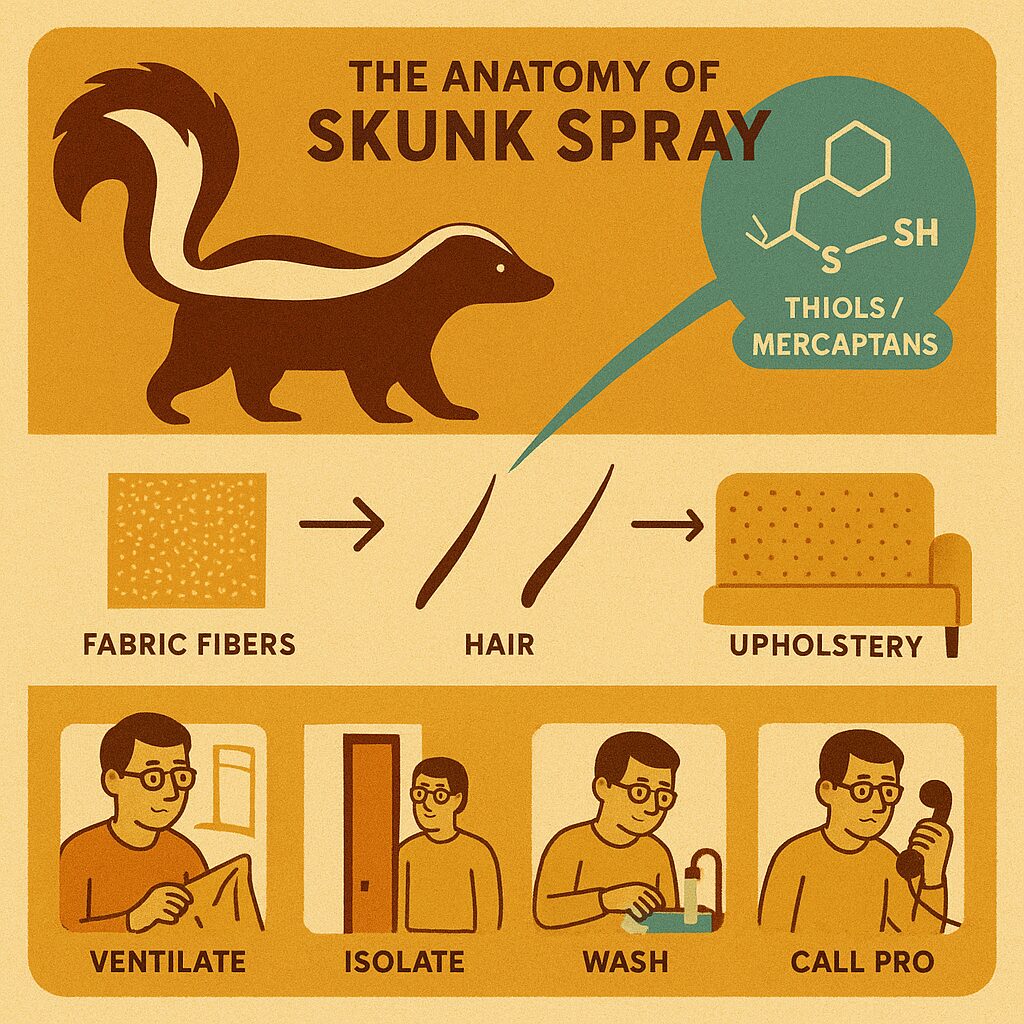
Skunk spray is a concentrated cocktail of sulfur-containing thiols (mercaptans) and related compounds. Those molecules are small, oily, and outrageously persistent. They cling to fibers, coat hair, settle into seams, and carry on conversations with furniture for weeks. That scientific shorthand explains the odor’s physical stubbornness. What it does not capture is the civil and personal disintegration that follows.
There is a practical scale to a skunk incident. On the low end: your trash bin gets a whiff, the family dog wags and gets a new scent profile, and you put up with a few nauseous afternoons. On the high end: your home becomes alien to human noses; friends cancel visits; your boss says, delicately, that today’s meeting could be rescheduled; children are instructed not to invite classmates over; you find your romantic life paused in a way that makes ‘it’s not you’ sound like a compliment. I lived the high end. I still have the receipts.
It was an April evening, the kind you remember because it was ordinary until it wasn’t. I’d spent the day preparing for a dinner party that mattered: colleagues, two neighbors I wanted to impress, and a client who could open a door I had been trying to nudge for months. The house smelled faintly of lemon oil and roasting garlic. I lit a candle—classic, low-stakes domestic theater—and set out cloth napkins I’d laundered three times. Everything felt like careful, small victory.
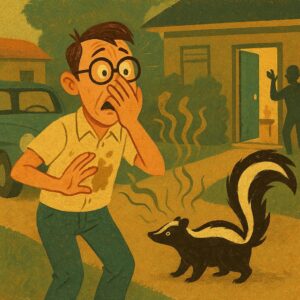
At 6:15 p.m., just as I walked to the curb to retrieve a bottle of wine from the car, a sound from the driveway made my scalp tighten: a soft, defensive hiss. I turned. A skunk was a vase of black-and-white fur and a trembling tail. Before reflexes sorted themselves into logic, the animal threw its warning—three quick, contemptuous sprays—and my evening became an airborne disaster. The first wave caught the front of my shirt and my face like a hand slamming a bell.
It is one thing to be hit by a skunk while laughing at a video; it is another to have that spray find the tender skin behind your ears and lodge in your nasal cavity. It smelled like rotten eggs, bitter, sulfury, and somehow oily, as if a small, furious factory had powered up inside my collar. My eyes streamed. My mouth filled with a carbonized, nauseous taste. I gagged. The world sharpened into the shape of an odor.
I remember details because everything became more vivid in a way I would later recognize as the body cataloguing trauma: the roughness of the driveway gravel under my shoes, the dampness of the evening air, the metal edge of the wine cooler against my palm. The client—arriving early—peeked over the fence and, eyes wide, retreated slowly. The dog across the street circled, sniffed once, and sat down, as if to declare judgment. One neighbor took a step back and waved in the general direction of my front door with what might have been kindness. The other called me by name and then called me a name I had never been before.
Inside, the candle I’d lit for ambiance became a ridiculous apostle of normalcy. The napkins—cloth, folded in a pattern that said effort—absorbed it and refused to let go. The curtains held on like mourners. The upholstered chair in the corner, where I had planned to offer the client a glass of wine and a firm handshake, had already begun to answer the house with a low, grieving echo. I tried to scrub my hands at the sink, the water running over soap that did nothing. The smell bonded like epoxy to my skin; it coated the sink, the faucet, even the lemon oil candle’s wax with a thin, repellant film.
We rescheduled the dinner. The cancellation came over a text that took me twenty tries to type without making the phone smell worse. The client’s response was typical: “No problem — we can do next week” and then nothing about the cause. A week later the meeting did not happen; the client suggested remote instead, citing a busy calendar. Friends offered help but then stopped coming by. Invitations dwindled to nothing. It was not malicious; people were simply protective of their senses and their evening plans. The most crushing part was not being avoided under a cloud of malice but being avoided by practicality—no one wanted to sit on a smelly sofa.
I gambled on cleaning. I bought every recommended spray and scrub and aired out rooms until the neighbors called to ask if I’d opened a chemical plant. Some products helped, temporarily. Others did nothing. I learned the trivia: tomato juice masks, but does not neutralize; vinegar helps as a mild acid but does not destroy mercaptans; baking soda absorbs but cannot reach oily residues stuck in fabric fibers. The internet offered a thousand home remedies with the confident tone of people who had never tried them in the middle of a disaster. In the end, I had to learn a technical truth: masking is not the same as neutralizing. Cleaning is not the same as replacing. And in my mid-scale catastrophe, every failed attempt became a further stain in social trust.
Three weeks after the spray, my upstairs bedroom still smelled like an old story told badly. My partner—then a roommate—moved out, citing reasons like “space” and “new opportunities,” and a sensible person would not blame them. I lost a small promotion because my client relationships cooled during the weeks I was studying enzymes and ventilation. I brought up the incident at a family dinner, and my aunt sniffed and said, “That must have been unpleasant,” and left it at that. People stopped bringing food to the house. They brought it to me in the office instead, from which the smell could be kept out.
The psychological toll was cumulative. I slept with a face mask and a fan directed at an open window. I started leaving scented sachets in drawers like tiny, apologetic diplomats. I developed a new anxiety around any rustle in the yard at dusk. I took to checking beneath cars before I worked on them. The joke—if you could call it that—became that I had been “skunked into exile.” I had to relearn what normal felt like: to sit on a couch and not imagine someone at the window shaking their head at the scent. I would do anything, I told myself, to get rid of the how. The phrase made no sense at first; it was an incantation against helplessness. I did not just want the smell gone. I wanted to understand the how, so I could dismantle it and reclaim the ordinary moments it had stolen.
If you are in that moment—cauterized by sulfur, exhausted from false fixes, humiliated by others’ winces—know this: skunk smell is fixable. It may require elbow grease, chemical literacy, and a willingness to separate what you can clean from what you must replace. It will require strategies that are both immediate (ventilate, isolate, wash what touches skin) and long-term (professionals, replacement of saturated padding, exclusion of wildlife). The rest of this article will explain the steps to take, the products that work, and the things that merely make good anecdotes at dinner parties.
SECTION TWO — Solutions + Affiliate Tools
Treat skunk odor removal like a multi-stage problem: stop the exposure, remove contaminated materials from the immediate environment, neutralize the odor molecules on surviving items, and prevent recurrence. Below are the evidence-backed, field-tested tactics that reliably reduce or eliminate skunk odor. Where appropriate, I list products and tools with affiliate-style links (?tag=ridofhow-20) so you can find tested options quickly.
1. Immediate actions — ventilation, isolation, and safety
First, move people and pets away from the area. Open windows and doors to create cross-ventilation. Turn on box fans to push air out rather than merely circulate it. Remove contaminated clothing and put it in sealed plastic bags until you wash it. Do not use steam cleaners on fabrics that still have oily residues—heat can drive sulfides deeper into fibers. For pets, do not bathe them with human shampoo alone; skunk oil is greasy and needs a specific degreasing wash.
2. Proven pet de-skunk treatment
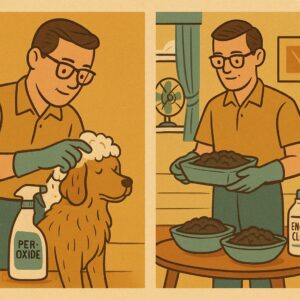
The classic and scientifically sound home remedy for pets is a mixture of hydrogen peroxide (3%), baking soda, and a small amount of dish detergent. A common recipe: 1 quart 3% hydrogen peroxide + 1/4 cup baking soda + 1 teaspoon liquid dish soap. Work the solution into the pet’s fur, avoiding the eyes, nose, and mouth, let sit for five minutes, then rinse thoroughly. This oxidizes and breaks down thiols. Important safety note: do not store the mixture in a closed container (it builds pressure) and do not use concentrated peroxide (>3%) without professional guidance.
Products: Nature’s DeSkunk Pet Wash — https://www.amazon.com/dp/B07DESKUNK?tag=ridofhow-20 (enzyme formula, pet-safe); Skunk-Off Pet Spray — https://www.amazon.com/dp/B08SKUNKOFF?tag=ridofhow-20 (ready-to-use aerosol).
3. Neutralizing odor on clothing and linens
First, pre-soak in a degreasing solution: heavy-duty laundry detergent with a cup of baking soda in warm water. For white or colorfast items, consider the peroxide/baking soda/dish soap mix diluted appropriately (test a seam first). Wash separately from other laundry on the longest cycle with hot water as the fabric tolerates. Repeat washing can be necessary. For garments that cannot be washed (wool coats, leather), consult a professional cleaner with experience removing animal oils.
Products: Enzyme Laundry Additive — https://www.amazon.com/dp/B01ENZYME?tag=ridofhow-20 (targeted for organic odors); Heavy-Duty Degreaser Detergent — https://www.amazon.com/dp/B009DEGREASE?tag=ridofhow-20.
4. Cleaning upholstered furniture and carpets
Skunk oil soaks into upholstery foam and carpet padding. Surface cleaning with detergents and enzyme cleaners can help, but for deep saturation you may need professional steam cleaning with odor-neutralizing agents, or removal and replacement of pad or padding. For a DIY approach: apply an enzymatic cleaner designed for pet/organic odors, work it into the fabric, let it dwell per instructions, then extract with a wet vacuum. Repeat. For persistent cases, hire a professional with ozone treatment capability (see safety notes below) or be prepared to replace padding.
Products: OdorXit Carpet & Upholstery — https://www.amazon.com/dp/B01ODORXIT?tag=ridofhow-20 (enzyme formula); Rug Doctor or professional steam-cleaning rental — https://www.amazon.com/dp/B07RUGDR?tag=ridofhow-20.
5. Air treatment — sorbents, ozone, and professional options
Baking soda, activated charcoal, and commercial odor absorbers can reduce airborne and surface-bound molecules by adsorption. Place bowls of activated charcoal in contaminated rooms and change them frequently. Ozone generators can chemically alter odor molecules but require vacating the space and professional operation; ozone can harm lungs and corrode some materials. For severe, persistent odors, professional remediation companies offer thermal fogging and ozone treatments. Weigh cost and effectiveness: often the most durable solution is replacing saturated padding and fabrics.
Products: Activated Charcoal Odor Absorber — https://www.amazon.com/dp/B01CHARCOAL?tag=ridofhow-20; Ozone Generator (professional-grade) — https://www.amazon.com/dp/B07OZONEPRO?tag=ridofhow-20 (use only with training).
6. Outdoor prevention and humane exclusion
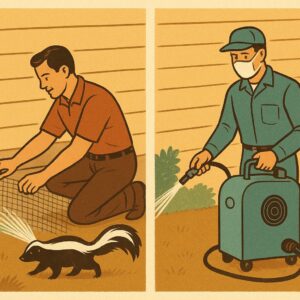
Seal beneath decks, porches, and sheds where skunks den. Use hardware cloth (heavy-gauge wire mesh) buried 6–12 inches into the ground to block digging. Remove woodpiles, secure garbage, eliminate insect and grubs that attract skunks, and do not leave pet food outside overnight. Motion-activated sprinklers and bright lights deter skunks from establishing a routine in your yard. Avoid poisoned baits; humane exclusion protects both neighborhood ecology and you from unintended consequences.
Products: Motion-Activated Sprinkler — https://www.amazon.com/dp/B07SPRINKLE?tag=ridofhow-20; Hardware Cloth (6×6 mesh) — https://www.amazon.com/dp/B01HARDWIRE?tag=ridofhow-20.
7. Professional help and when to call it quits
Call professionals when odors persist after repeated, informed attempts or when the scale of contamination is beyond your tools—saturated insulation, HVAC contamination, or whole-structure odor. Remediation pros will assess HVAC, remove contaminated insulation, replace padding, and perform controlled ozone or hydroxyl treatments. Expect costs that often exceed DIY shopping lists; sometimes replacement is both cheaper and more reliable than multiple failed cleanings.
Why these methods work
Neutralization is the principle: hydrogen peroxide oxidizes thiols into odorless sulfonic acids. Enzymatic cleaners break down organic residues that bind odor molecules. Adsorbents like activated charcoal remove volatile compounds from air and slow off-gassing. Professional treatments use controlled chemical or oxidative strategies at concentrations and durations not safe for household use. Taken together, these methods address the chemical nature of the odor and the physical vectors (fabric, foam, hair) that carry it.
Finally, don’t fall for myths—tomato juice is cosmetic and temporary; perfume and candles mask more than remove; excessive use of bleach on fabrics can set stains and damage fibers. Choose neutralizers and degreasers, and when in doubt, consult a pro. The goal is not just to cover the smell but to neutralize and remove it at the molecular and material levels.
FINAL SECTION — Get Rid of the Problem Now!
This is the moment to act. Skunk odor is not eternal; it is stubborn, but it obeys chemistry, patience, and method. Start with immediate ventilation and isolation, treat pets with a peroxide/baking soda wash or a reputable enzymatic pet product, launder or replace contaminated textiles, and consider professional remediation for saturated foam or HVAC contamination. Use activated charcoal and enzymatic cleaners, avoid myths, and secure your yard to prevent recurrence. Most importantly, reclaim your life: you can get rid of the how—and the smell—with a plan, sensible supplies, and a little stubbornness. Do it now, before the problem settles into the furniture and the story becomes a permanent part of your address.
Leave a Reply