Neighborhood on Edge: The Quiet Takeover of Wasps in Suburban Yards
They arrive not with sirens but with an industry of wings, a staccato hum at the edge of a barbecue, the sudden slide of conversation when someone says, “Did you see that nest?” Wasps are not merely insects; in many neighborhoods they are a metric of unease. They reduce afternoons to calculation, weddings to risk assessments, and playgrounds to fenced-off danger zones. For people who live with intense sensitivity, multiple small children, or a job that keeps them outdoors, the presence of wasps colonizes entire routines.
 The day that turned the irritation into a private calamity felt ordinary. It was a Saturday; we had planned a backyard dinner for close friends. I remember the smell of charcoal, the wet sweetness of sliced peaches, the glassware sweating on the patio table. The sky had that low, late-summer light, honeyed and forgiving. I stood with a plate in one hand and a pair of tongs in the other when a wasp, close as a whisper, brushed my temple. He landed, dull-black body iridescent in the light, and before I could set the plate down it had stung me once, then twice, on the ear and the side of my neck.
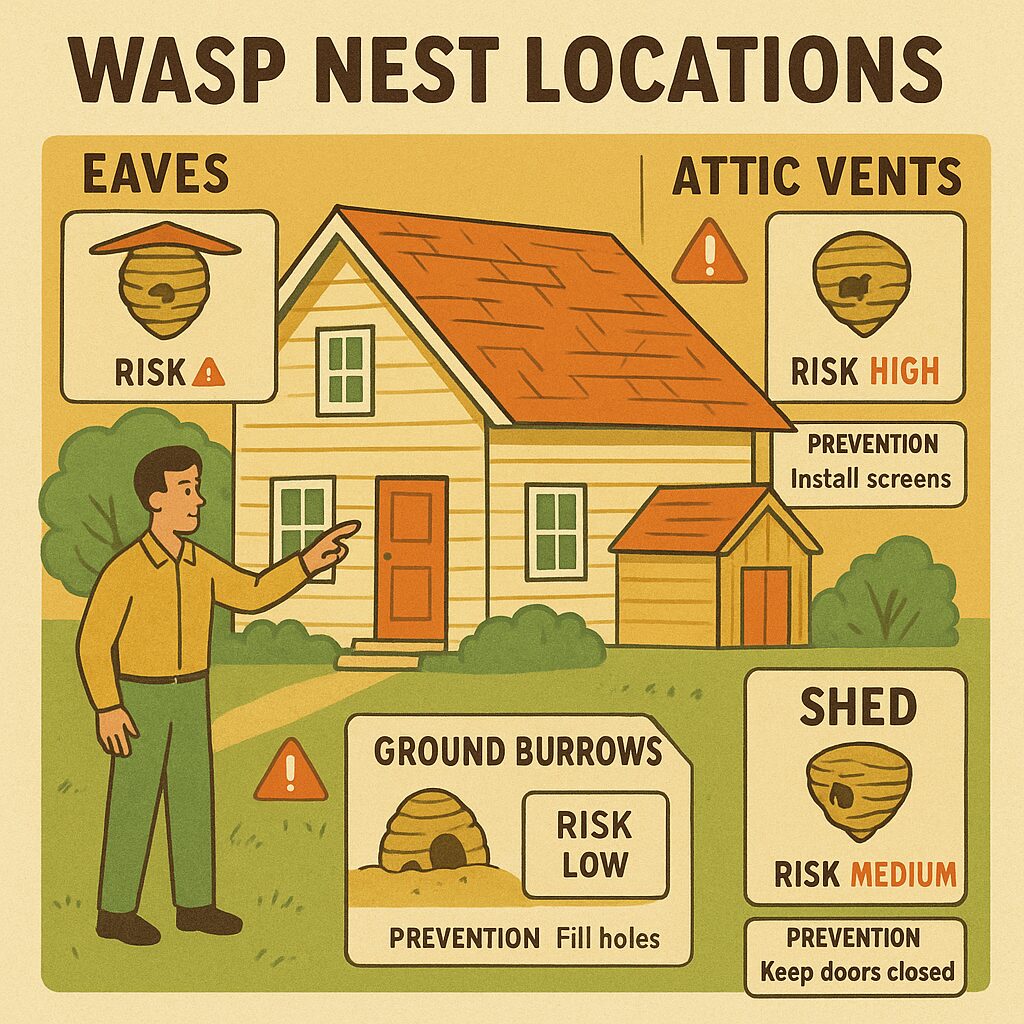
Beyond the nuisance is a catalog of quality-of-life losses: canceled picnics, bristling fences of caution around eaves and sheds, mail left at the curb because no one will retrieve it. For those who react strongly to stings, wasps are a medical variable, an object of anxiety that sits inside the skull like a tiny alarm bell. The steady background hum of a nest can unwrap sleep for a neighbor. A single nest under a porch becomes a neighborhood story: whispers, blocked walkways, diverted dog routes, and the muttered agreement to call in someone who knows how to make the buzzing stop.
This is not only inconvenience. The psychological tax grows. People stop inviting friends over. Children are instructed to avoid parts of the yard; those parts shrink. Social rituals—dinners, pool parties, backyard birthdays—are traded for restaurants or indoor spaces. The feeling is not merely that a pest exists; it is that the home has been punctured by an enemy that will not negotiate. The sense of control that a household claims over its own space frays.
And I know this not from a sanitized anecdote but from the kind of ruin that looks small until you add up the months and the nights. At first it was a single nest, the size of a grapefruit, tucked in the soffit above our back door where we used to hang holiday lights. I noticed a few wasps in June, and then more, and by late July they were territorial. This is where I must be blunt and embarrassingly specific: I thought I could live with it. I thought I could outsmart the wasps with caution and avoidance. That arrogance was the beginning of the collapse.
The sting was sharp, like a hot needle sliding into the skin. My ear went bright and then numb in a way that let only thunder through the rest of my senses. A metallic taste filled my mouth. People around me laughed reflexively—people will always laugh because they do not yet understand that laughing is a social salve—but their laughter became a distant sound. My throat tightened the way it does when you cry and can’t let the sob out. My tongue felt heavy. I tried to breathe through the space in my chest and miscounted the beats.
We fled inside. The dining set remained on the patio, plates half-filled, candles guttering. My host’s face—my partner’s face—was a map of panic and efficiency. Someone called 911. I remember the antiseptic tang of antihistamine tablets and the sensation of the kitchen floor under my feet, cool and unforgiving. At the emergency room I sat under fluorescent lights while the doctor looked at my neck and said the words that, later, would resound in my dreams: “Anaphylaxis is not only about stings; it is about timing.” I scribbled the phrase in my head like a ledger.
The immediate medical episode resolved—an injection of epinephrine, monitoring, and a discharge with prescriptions and strict instructions to see an allergist. But the injury did not stop at a healed puncture. The wasps had introduced an idea into our household: our yard was no longer safe. Sleep thinned into misdirected vigilance. I would lie awake calculating the directions a wasp might take if it wanted the door. The backyard, which had once been an expansion of the house, now resembled an exclusion zone.
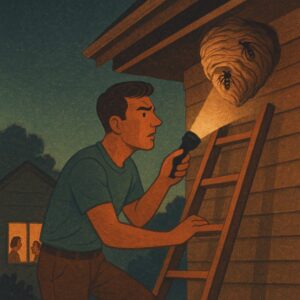 Social fallout followed predictably. Our friends began to decline invitations with the polite fiction of prior engagements. The parents of my kids’ playmates shifted pickup locations to the front yard. Our mail delivery stayed, but the mail left in the box felt ephemeral: a package might be picked up later by someone braver than us. The dog would not cross the threshold for weeks, barking at the invisible line where a nest might be. My partner took to checking the roofline like a lighthouse keeper; his evening relaxation turned into a reconnoiter of every crevice. The emotional tone of the house went from hospitality to defense.
The humiliation crept in, subtle and relentless. I was embarrassed that an insect had made me a medical patient, ashamed at the way my life shrank under a winged insect’s governance. At parties I found myself apologizing for the state of our yard, as if a homeowner’s failure were a personal moral failing. A friend, attempting consolation, said it was simply pests; the casualness of that phrase added insult to injury. I grew possessive of the front yard, which ironically became my refuge: I would sit there like a sentinel, watching the back door with a paranoia that had become normalized.
Weeks passed. Attempts to solve the problem made it worse. I tried a store-bought spray at dusk and watched, frozen, as the wasps, frantic and vengeful, emerged in a scatter that seemed to expand the threat rather than contract it. I called a handyman who recommended a ladder and a canister—”spray from a distance,” he said, in the tone of someone who has never been within twenty feet of a nest. The wasps interpreted the disturbance as war; they retaliated with an organized fury that sent three members of a dinner party to urgent care. I promised myself I’d never again be that unprepared.
Months of cautious living accumulated and calcified into a new normal: closed blinds at certain times, delegations of outdoor tasks to the most fearless member of the household (a policy that is demoralizing in its social calculus), and nights spent replaying the sting like a movie in which I had unwisely chosen to be the lead. That injury to the self—the way the mind rewires around a threat—was the most durable damage. I became hypervigilant about insects in general, suspicious of all buzzing, mistrustful of any animal that approached the house. The wasps had not merely stung my skin; they had rewired my days.
So I write this as someone who cannot tolerate ambiguity about wasps anymore. I wasted time making mistakes. I said the words we all say when a problem feels technical: “We’ll figure it out; we’ll get rid of the how.” Except the phrase is backward—it’s not the how that’s missing, it is the urgency and the calibrated method. That confusion cost nights, friends, and a sense of normalcy. If a single sentence can stand in for the experience: do not wait until a nest defines the limits of your life. Wasps are repairable; the damage of inaction is not.
How Experts Remove Wasps: Proven Methods, Tools, and Why They Work
When you strip away the fear and the mythology, wasps are creatures of biology and predictable behavior. They build nests near food and shelter, in sheltered eaves, inside sheds, or in the hollows of trees. The path to elimination relies on three principles: locating the nest, choosing the right mode of removal for that species and location, and protecting yourself and anyone nearby. Below are expert-level strategies used by pest-control professionals and entomologists, translated into actionable steps for the competent homeowner and the person deciding when to call a pro.
1. Locate and Observe: Know Your Enemy
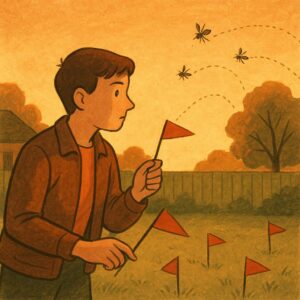
Why it works: Wasps are site-faithful. Workers travel back and forth from the nest on predictable flight paths. Identify the outbound and inbound routes at dawn or dusk when wasps are less active and lighting makes trajectories visible. Observing the pathways tells you where the nest is and whether it’s a solitary burrow (e.g., ground-nesting yellow jackets) or a built comb in eaves.
Practical tip: Mark the flight path with a small flag or tape at a safe distance. Never get between the nest and its foraging corridor. If the nest is inside a wall cavity or high eave, plan for professional removal.
Recommended tool: Heavy-Duty Wasp Trap — for monitoring and reducing foragers while you plan.
2. Active Removal Options: Match Method to Nest
Ground nests (yellow jackets): Use a professional-grade insecticidal dust labeled for subterranean wasps, applied at night when workers are present and most receptive. The dust adheres to returning workers and is carried into the colony.
Why it works: Dusts are passive carriers that get transported into the nest by worker traffic, reaching hidden larvae and the queen without requiring direct nest contact.
Recommended tool: Long-Range Insecticide Dust — choose a product explicitly labeled for wasp and yellow-jacket control.
High, exposed nests (paper wasps, aerial hornets): Use a foaming insecticide or a pyrethroid spray labeled for aerial nests, applied from a safe distance at night in PPE. Foams expand and coat comb surfaces; pyrethroids deliver rapid knockdown.
Why it works: Nighttime application takes advantage of reduced wasp activity and lower temperatures; foams and pyrethroids reach brood cells and produce systemic mortality across the nest.
Recommended tool: Professional Grade Wasp-Killer Spray — look for a foaming nozzle and a product specified for wasp nests.
If the nest is inside a cavity or inaccessible wall: Call a licensed pest-control pro. They have access to inspection cameras, dust-blowing gear, and the training to treat without endangering occupants.
Why it works: Internal nests are unpredictable; cutting into walls or drilling without training can scatter the colony and increase stings.
Recommended tool: Protective Beekeeper Jacket — for any homeowner attempting cautious, small-scale work, though professionals should handle large or internal nests.
3. Non-Lethal and Preventive Measures
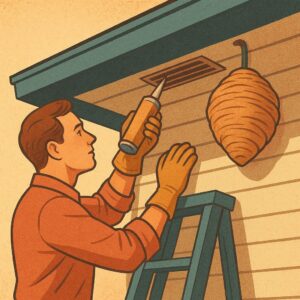 Traps and baits reduce foragers and are useful as a first-line measure, especially during late summer when populations peak. Decoy nests can dissuade some species (paper wasps avoid building near existing colonies).
Why it works: Traps remove workers and reduce reproductive throughput; decoys exploit social behavior to prevent new nests.
Practical tip: Seal gaps in eaves, screens, and soffits in late winter or early spring to prevent establishment. Regular inspections of rooflines and sheds in early season catch small nests before they balloon.
4. When to Hire a Professional
Call a licensed pest-control service if the nest is high, internal, large (basket-sized or bigger), or if occupants have allergy histories. Professionals bring not just stronger products but also containment strategies—tarps, vacuum systems, and sometimes structural access—to ensure the colony is eliminated and that return is improbable.
Why it works: Experience reduces mistakes. Professionals minimize collateral risk to non-target species and to people.
Which method to choose depends on species, nest location, and risk tolerance. My advice: for ground nests and moderate aerial nests, a careful, PPE-equipped approach using dusts or foams at night is effective. For anything in walls, attics, or high eaves, don’t improvise: call a pro.
Safety and Legal Notes
Always read labels. Insecticides are regulated, and misuse can harm pollinators, pets, and people. In many jurisdictions, certain nests on public property or protected trees require municipal permission before removal. When in doubt, document the nest and photograph flight paths—this will help when you call a pro.
Act Now: Stop the Buzz, Reclaim Your Yard
Wasps are a problem that rewards speed and smart choices. The longer a nest remains, the larger and more dangerous it becomes. If you are hesitant, remember the small sentence that began my undoing: do not wait to “get rid of the how”—the logistics, the correct timing, and the right tools are the difference between a manageable project and a household crisis.
Start tonight by observing flight paths at dusk, then choose one of the proven removal strategies above. If you have allergy risk or the nest is in a wall or high eave, make the call to a licensed professional today. Reclaiming your yard is not an act of bravado; it is a restoration of normal life. Choose the method that answers the biology, protect yourself, and take back your summer.
Leave a Reply