Horse flies are not pests. They are airborne chainsaws with wings, dripping malice, buzzing like tiny helicopters powered by spite. Anyone who has felt the sting of their bite knows it’s not just pain—it’s a uniquely personal insult. But nothing could have prepared me for the way horse flies would dismantle my dignity, my sanity, and my sense of hope, one welt at a time. I didn’t just want them gone. I wanted to get rid of the how—the confusion, the desperation, the agonizing uncertainty about what to do as my life fell apart under their onslaught.
It started during what was supposed to be a peaceful lakeside retreat. I had rented a small cabin by the water, imagining I’d spend the week reading, baking in the sun, reconnecting with nature—perhaps even discovering a new and improved version of myself. A version who wasn’t perpetually stressed, over-caffeinated, and late on deadlines. A version with clarity. A version of serenity.
Instead, I met them.
The first horse fly announced itself by diving at my shoulder like a hypersonic nail gun. The impact made me yelp so loudly the couple in the cabin next door thought I was either drowning or attempting opera. I dismissed it as one fluke. A random encounter with one bug who took its job too seriously.
But horse flies do not travel alone. They come in squads—organized, strategic, relentless. Within minutes, I was sprinting across the yard, arms flailing, legs pumping like I was trying out for a track team I never asked to join. A cluster of them followed me with the precision of heat-seeking missiles.
That evening, I counted thirty-two bites. A patchwork of inflamed welts, each the size of a dime but carrying the rage of a hornet and the emotional weight of a midlife crisis. The itching was biblical. I looked like I had rolled naked through a patch of poison ivy while simultaneously losing a fight with a toaster.
By day two, the bites had swollen into raised, angry red lumps. Sleep was impossible. Showering was torture. Wearing clothes felt like carving myself with sandpaper. I tried calamine lotion, aloe vera, cold packs, witch hazel, even the old “just ignore it” method (a failure of legendary proportions). The pain radiated through my limbs like static electricity that refused to discharge.
The emotional unraveling came next.
First, I developed a paranoia so intense that every slight vibration or breeze felt like a horse fly hovering near me, preparing for another attack run. I couldn’t drink iced tea on the deck without flinching every few seconds like I was living through sporadic sniper fire. The buzzing haunted me. Phantom buzzing. Buzzing that wasn’t even real but felt as real as my rising panic.
Then came the humiliation.

On the third day, while fleeing from yet another swarm, I tripped over a rock, stumbled into the lake, and emerged looking like a soggy, welty raccoon. A family kayaking nearby witnessed the entire aquatic disaster. Their youngest child asked, “Is that person okay?” The mother whispered, “Don’t stare.” My remaining scrap of dignity dissolved beneath the lake surface.
By the end of the week, the bites had spread into clusters. My skin had become a mottled topographical map of suffering. I had scratched in my sleep so intensely that I shredded two pillowcases. I considered going home early, but even the walk from the cabin to my car required crossing an open field—the horse fly version of a gladiator arena.
This was no longer an inconvenience. This was war.
I vowed that when I finally escaped, I would learn exactly how to destroy horse flies, to prevent anyone else from suffering the psychological spiral that had consumed me. That’s when I committed to finding real, effective strategies—ways not just to cope, but to obliterate the problem.
How to Actually Get Rid of Horse Flies
Horse flies are infamous for a reason: they’re strong, fast, durable, persistent, and opportunistic. Their larvae thrive in moist environments. Their adults are aggressive daytime feeders with scissor-like mandibles powerful enough to slice skin like fruit leather. They detect movement, heat, and carbon dioxide, making humans and livestock irresistible targets.
But despite their brutality, they can be defeated.
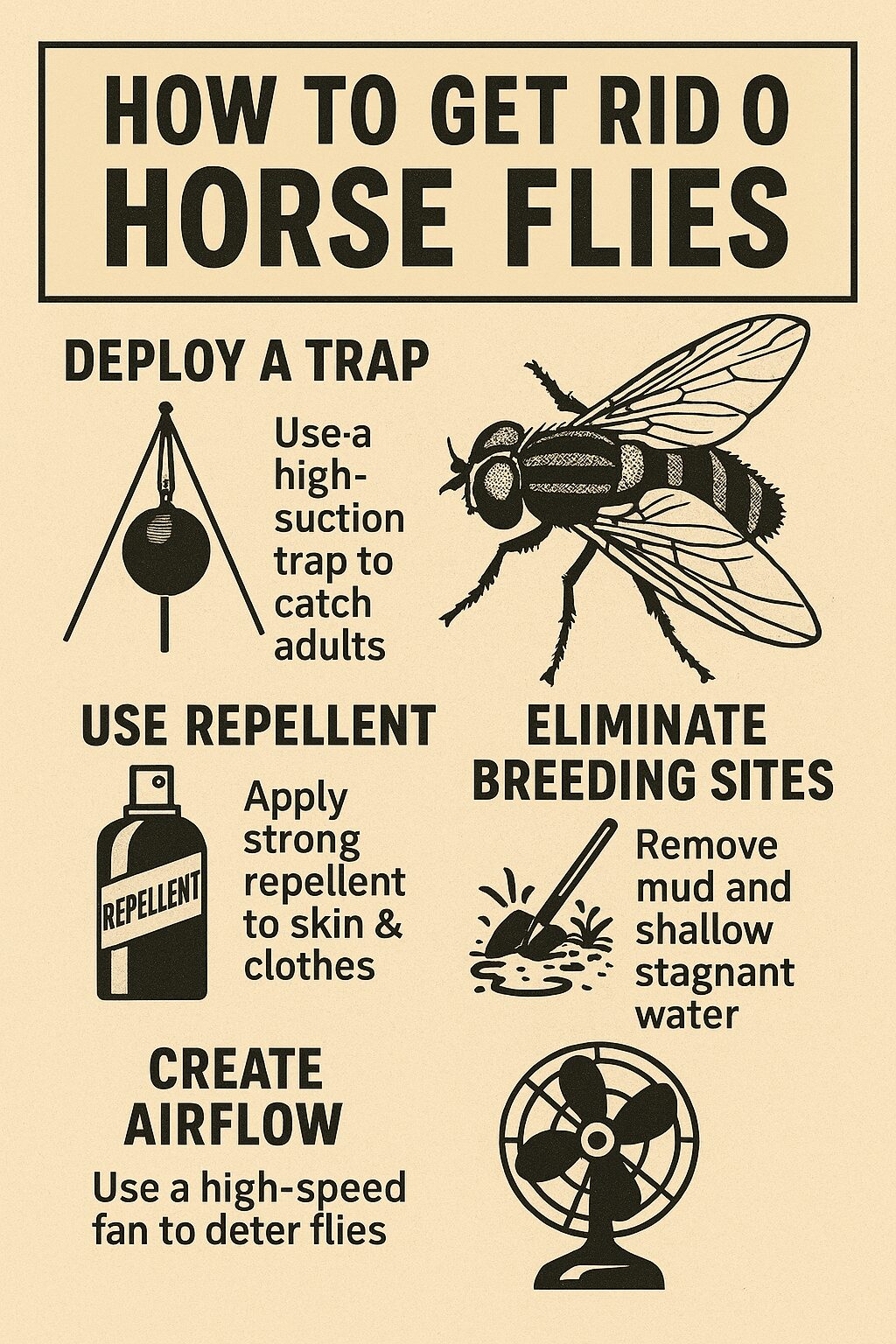
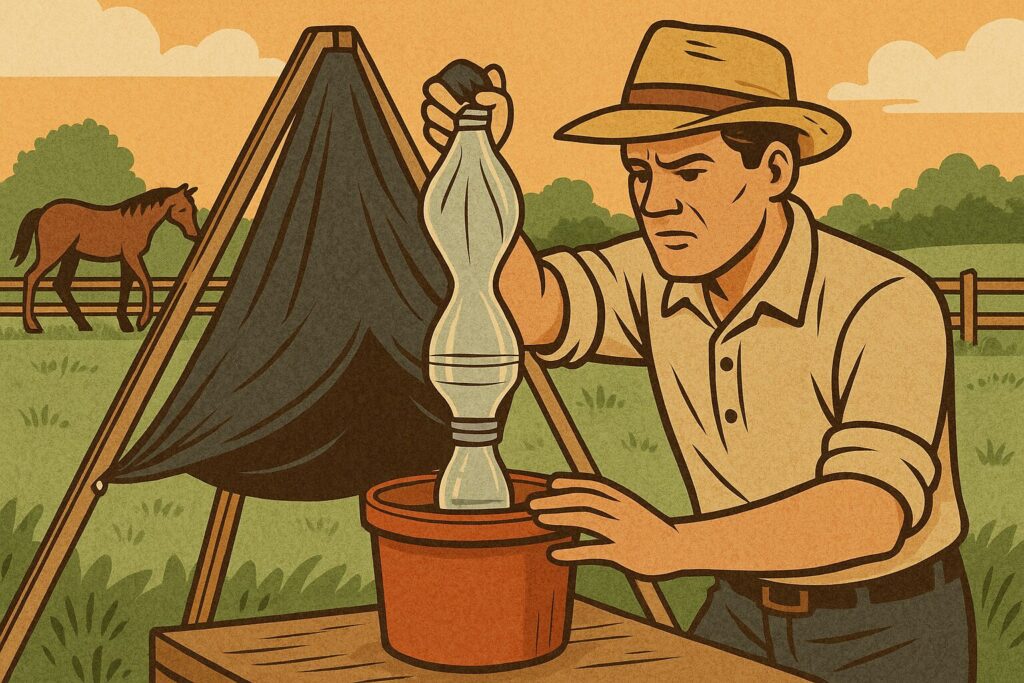
1. Deploy a High-Suction Horse Fly Trap (Massive Reduction Method)
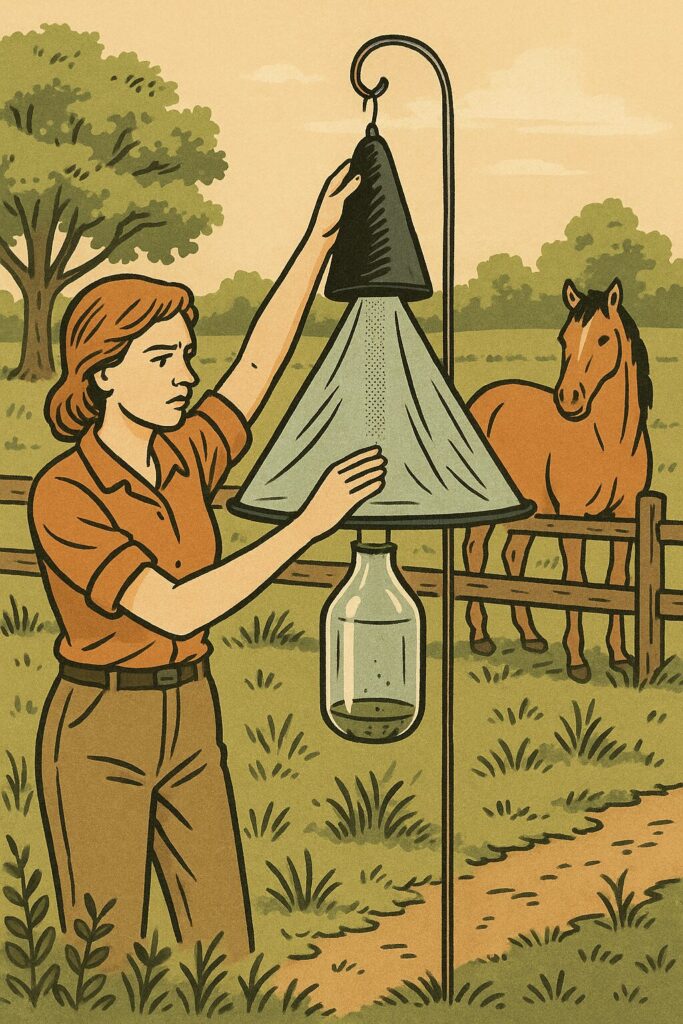
Horse fly traps work by luring the insects toward a dark, warm decoy—often a large black ball—and capturing or killing them once they land. This method can reduce local populations dramatically within days.
Place traps near tree lines, along water edges, near barns or sheds, and well away from outdoor living areas. Hang them roughly 3.5 feet off the ground, where horse flies usually patrol.
2. Use a Strong Repellent on Skin and Clothing (Personal Defense Layer)
Horse flies resist weak repellents. DEET, picaridin, and permethrin-treated clothing are the most reliable personal defenses. Reapply according to product directions—horse flies are persistent enough to exploit any gap in coverage.
3. Eliminate Breeding Sites (Environmental Suppression)
Horse fly larvae thrive in wet soil, marshy ground, livestock runoff zones, and damp organic matter. Improving drainage, removing shallow standing water, cleaning stalls frequently, and stabilizing muddy areas with gravel all help break the life cycle.
4. Create Airflow Barriers (Physical Interference Strategy)
High-speed fans disrupt horse fly flight. Aim fans across patios, inside barns, or near seating areas. Even strong predators struggle in chaotic airflow, and horse flies are no exception.
5. Wear Light-Colored Clothing (Passive Deterrent)
Horse flies are attracted to dark colors and strong contrast. Wearing light, matte fabrics makes you less visually compelling to them, especially when combined with repellent.
6. Protect Animals (Livestock and Pet Defense Protocol)
For animals, use fly sheets, ear bonnets, fly boots, sprays, and, where feasible, barn misting systems. Reduce stress, wounds, and blood loss by limiting the number of successful bites.
7. Combine All Approaches (Integrated Destruction Plan)
Horse flies are too aggressive and mobile for a one-dimensional solution. Layer traps, repellents, environmental controls, airflow barriers, clothing choices, and animal protection to crush populations and reclaim your space.
Get Rid of the Problem Now!
Horse flies destroy peace, serenity, and skin. They ambush hikers, torment livestock, ruin vacations, disrupt outdoor gatherings, and—if you’re unlucky—unravel your sense of dignity one welt at a time.
But you can stop them. Now that you know exactly how they operate and how to shut them down, you can reclaim your yard, your animals, your comfort, and your sanity. Stack the solutions, execute the plan, stay disciplined, and soon you’ll not only defeat the horse flies—you’ll get rid of the how altogether.
Leave a Reply